
Elderly Parent Moving Downstairs for Safety in Belfast: A Practical Guide for Families
- Feb 3
- 3 min read
If your elderly parent is living alone in Belfast and beginning to struggle with stairs, it’s natural to feel concerned about their safety. Sometimes this worry comes after a slip or near-fall. Other times it’s a gradual realisation — your parent avoids going upstairs, sleeps on the sofa, or seems less steady than before.
For many families, elderly parent moving downstairs for safety Belfast becomes an important step in reducing fall risk and supporting independence at home.
It’s a common and sensible consideration. Falls are the leading cause of injury-related hospital admissions among older adults, and stairs are one of the highest-risk areas in the home. Reducing the need to use stairs can significantly lower the chance of serious injury.
Why Stairs Become More Dangerous as We Age
As we get older, changes in balance, muscle strength, vision and reaction time can make everyday movements more difficult. Even someone who has used stairs comfortably for years can suddenly find them tiring, unsteady or intimidating.
This doesn’t mean your parent can’t remain independent. It simply means the home may need small, thoughtful changes to keep them safe.
Elderly Parent Moving Downstairs for Safety in Belfast
For many families, creating a downstairs sleeping area is a practical alternative to installing a stair lift — especially if a stair lift feels unsuitable, confusing, or stressful for your parent.
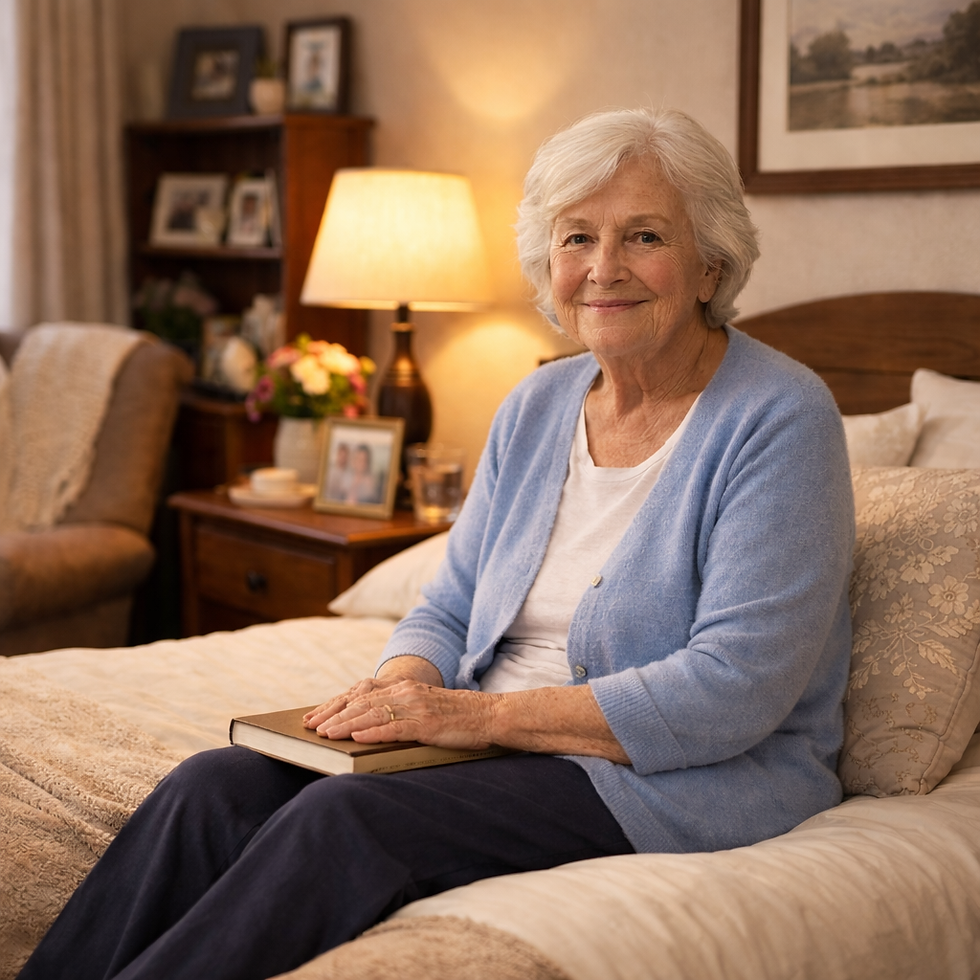
A living room, dining room or spare room can often be adapted into a comfortable bedroom. What matters most is that the space feels familiar, warm and homely rather than clinical.
A proper bed, good lighting, clear walking space, and easy access to glasses, water and medications can make a big difference. If possible, having access to a downstairs toilet or commode can also reduce night-time risk.
Is a Stair Lift Always the Right Option?
Stair lifts work well for some people, but they are not the right solution for everyone. Some older adults feel anxious using mechanical equipment, while others may find the controls confusing — particularly if there are memory or cognitive changes.
In these situations, moving downstairs can feel simpler, calmer and more natural.
The Emotional Side of Moving Downstairs
It’s important to recognise that this change can feel emotional for your parent. They may worry it signals “getting worse” or losing independence.
Gentle conversations focused on comfort, safety and staying in their own home longer can help. Reassuring your parent that this step is about protecting independence — not taking it away — often changes how they feel about the idea.
Extra Reassurance: Having Someone in the Home
Even with a safer home layout, many families still worry about evenings and night-time.
Home-share can be a supportive addition. A carefully matched companion lives in the home, offering a friendly presence, companionship and someone nearby overnight. It’s not medical care, but it provides reassurance for both the older adult and their family.
For adult children — especially those who don’t live nearby — knowing someone is in the house can bring real peace of mind.
A Gentle Next Step
If your elderly parent in Belfast is struggling with stairs or you’re considering moving their bedroom downstairs, you don’t have to figure it out alone.
You’re very welcome to get in touch for an informal chat about your parent’s situation and whether home-share could form part of a wider safety plan.
Small changes can make a big difference — and safety, comfort and dignity can go hand in hand.


Comments